Technology-driven
Build the office as an AI-native operating system for intake, education, follow-up, recall, care navigation, analytics, and staff enablement — not a traditional practice with a chatbot bolted on.
Investor and partner roadmap
This page turns the AI-native whole-health dental office vision into a practical roadmap for the Space Coast Initiative pitch process: what we need to prove, build, document, and ask for before serious capital or strategic partnerships move.
Build the office as an AI-native operating system for intake, education, follow-up, recall, care navigation, analytics, and staff enablement — not a traditional practice with a chatbot bolted on.
Prove one flagship whole-health dental practice, document the playbook, then expand through repeatable systems, memberships, acquisition transformation, and provider training.
Modern dentistry is still episodic and procedure-centered. Patients need a trusted bridge between oral health, airway, sleep, inflammation, prevention, and whole-body wellness.
Use the pitch process to sharpen the market, AI wedge, legal structure, economics, acquisition path, and partner network before raising or acquiring.
Platform architecture draft
This draft shows the updated structure: Mako Core powers the intelligence, Nuvana Healthworks packages healthcare-specific infrastructure, Nuvana Dental proves it with real patients, and The Sanctuary sits around the model as the referral and community ecosystem for trusted providers.
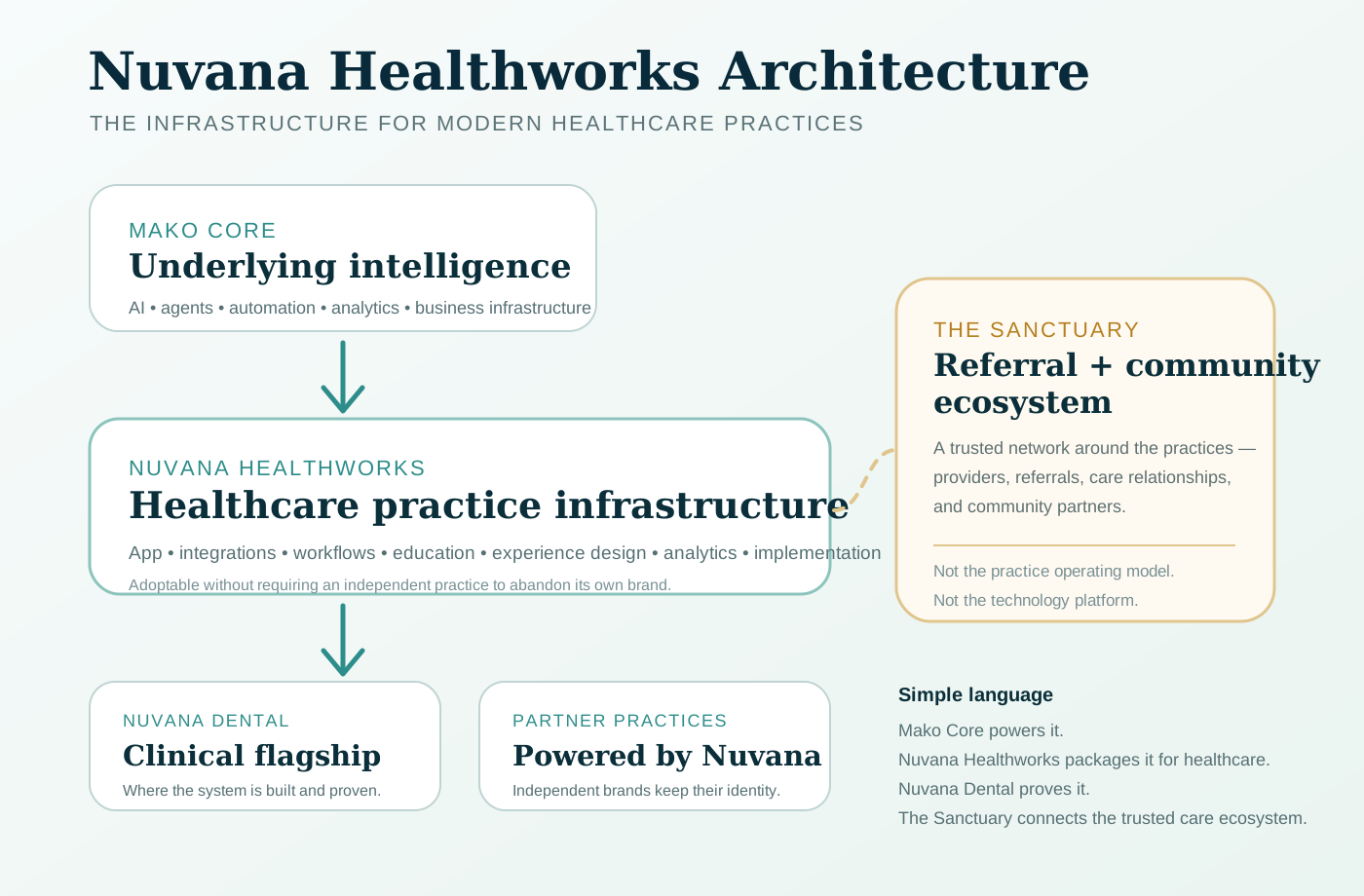
Click to open full-size diagram
Use it for
Website review, advisor conversations, and a pitch-deck architecture slide. It makes the AI-native model concrete without focusing on ownership or compensation.
Still draft
Brand name, final legal structure, clinical claims, and ownership economics should stay subject to professional review before being treated as final.
Pitch takeaway
Mako Core powers the intelligence, Nuvana Healthworks packages it for healthcare, Nuvana Dental proves it, and The Sanctuary connects the trusted care ecosystem.
Step 01 options
Click each option below and review which thesis feels strongest for the Space Coast pitch. The best final answer may combine pieces: a human problem, a credible clinical model, a clear AI wedge, and a practical first-office path.
Option A — The patient trust thesis
Best for: Judges and community partners who need to feel the human problem quickly.
Review draft
Most dental care is episodic: patients come in when something hurts, get a procedure, and leave with little connection to their broader health. Nuvana is building an AI-native whole-health dental office that starts with one flagship practice and uses technology to make care more preventive, personal, and trusted. The dentist remains the clinical authority; AI helps the team prepare, educate, follow up, and keep patients connected between visits.
Proof to collect
Edit note
Most emotionally clear; keep medical claims conservative and counsel-reviewed.
Option B — The AI operating-system thesis
Best for: Investors who want to understand the scalable technology wedge.
Review draft
Nuvana is building an AI-native dental operating model, beginning with a flagship whole-health practice. The opportunity is to redesign the patient lifecycle — intake, visit prep, treatment education, follow-up, recall, membership, and team workflows — around intelligent systems that reduce friction and improve trust. The first office proves the model; the playbook can then scale through additional locations, acquisition transformation, memberships, and provider enablement.
Proof to collect
Edit note
Strongest for the application; needs a simple demo or workflow diagram so it does not sound abstract.
Option C — The acquisition transformation thesis
Best for: Strategic investors, lenders, brokers, and operators evaluating the path to first revenue.
Review draft
Instead of spending years proving a de novo clinic from zero, Nuvana can start by acquiring or partnering with an existing practice that already has patients, staff, and cash flow. The value creation comes from transformation: stronger brand, better patient experience, whole-health clinical programs, membership care, and AI-enabled operations. The first location becomes both a business and a laboratory for the repeatable model.
Proof to collect
Edit note
Most practical financially; depends on finding the right target and structuring the partnership correctly in Florida.
Option D — The premium prevention thesis
Best for: Patient-focused partners and mentors who care about differentiation and brand.
Review draft
Nuvana is designed for patients who want dentistry to feel clearer, calmer, and more connected to their health. The office combines high-quality comprehensive dentistry with prevention, airway and sleep awareness, education, membership care, and AI-supported follow-up. The business opportunity is to build a trusted premium dental home that patients choose because it feels meaningfully better than the standard insurance-driven experience.
Proof to collect
Edit note
Most brand-friendly; investors may ask how it scales beyond one boutique office.
Step 02 options
These are different ways to prove there is a real first market — not just a nice concept. Pick the one that best matches what we can actually document before the application.
Option A — Orlando premium wellness beachhead
Best for: A polished application that needs a clear first customer segment.
Review draft
The first beachhead is not everyone with teeth. It is patients who already value prevention, sleep, aesthetics, longevity, and a higher-trust healthcare experience. Orlando gives us a practical test market with growing suburbs, family formation, professionals, and wellness-oriented consumers who are frustrated by rushed, insurance-driven dentistry.
Proof to collect
Edit note
Strong for positioning; needs sourced demographic and competitor data.
Option B — Employer and professional corridor thesis
Best for: Investors who like distribution angles and repeatable patient acquisition.
Review draft
Nuvana can target working professionals, founders, executives, clinicians, and employer clusters that need convenient, high-trust care. The office becomes a premium dental home for busy patients who want prevention and clarity, while partnerships with employers, gyms, wellness clinics, and professional communities reduce dependence on generic advertising.
Proof to collect
Edit note
Useful if we want a growth story; must avoid sounding like an untested distribution hack.
Option C — Space Coast / Central Florida expansion logic
Best for: The Space Coast event specifically, because it connects the pitch to the regional ecosystem.
Review draft
The initial office can be Orlando/Central Florida, but the broader opportunity fits the Space Coast and Florida growth story: fast-growing communities, families, retirees, defense/aerospace professionals, and a need for modern healthcare experiences. The pitch can show one focused beachhead with a believable path to regional expansion.
Proof to collect
Edit note
Best event-specific framing; keep the first market focused so it does not feel scattered.
Step 03 options
These options help Siraj shape the clinical point of view in a way that is exciting, credible, and safe for public review.
Option A — Comprehensive whole-health exam
Best for: A credible clinical foundation that is easy for judges to understand.
Review draft
The clinical model begins with a comprehensive visit that connects the mouth to the rest of the person without overclaiming. Patients leave with a clearer understanding of risk, priorities, prevention, and treatment options. AI helps organize information and education, but the dentist owns diagnosis and care decisions.
Proof to collect
Edit note
Most credible first clinical anchor; needs Siraj's exact philosophy and language.
Option B — Prevention and membership care
Best for: A recurring-care story with business model benefits.
Review draft
The clinical model can center on prevention: periodontal health, restorative durability, sleep/airway screening, hygiene excellence, and coaching between visits. A membership layer can make care more continuous and predictable while giving patients a clearer reason to stay engaged beyond emergencies.
Proof to collect
Edit note
Strong operationally; must be priced and packaged carefully.
Option C — Master dentist excellence plus modern systems
Best for: Making Siraj's role central without making the model dependent on one heroic provider forever.
Review draft
Nuvana should not pitch AI as replacing clinical judgment. Siraj's master-level dentistry sets the standard for diagnosis, treatment philosophy, patient trust, and what good care feels like. The operating system then captures and supports that standard through protocols, education, follow-up, and team training.
Proof to collect
Edit note
Best team story; needs to avoid key-person risk by showing how the standard becomes a playbook.
Step 04 options
These are different ways to describe the technology layer. The application should make this feel concrete and human-in-the-loop.
Option A — Patient lifecycle copilot
Best for: Explaining the AI wedge in plain language.
Review draft
The operating system turns disconnected patient moments into one guided journey. AI summarizes intake, prepares the team, drafts education, supports follow-up, flags recall opportunities, and helps patients understand their next best step. The result is a calmer patient experience and a more consistent team workflow.
Proof to collect
Edit note
Best all-around explanation; keep it specific so it does not sound like generic AI.
Option B — Treatment education and trust engine
Best for: Showing patient value quickly.
Review draft
One of the biggest gaps in dentistry is trust. Patients often leave confused about what matters, what can wait, and why treatment costs what it does. Nuvana can use AI to create clear, personalized, dentist-approved education and follow-up so patients feel informed instead of pressured.
Proof to collect
Edit note
Very human and credible; be careful not to sound like AI-powered upselling.
Option C — Practice intelligence dashboard
Best for: Investors who want measurable operating leverage.
Review draft
The AI-native layer can help the team see what usually gets buried: incomplete treatment, overdue recall, membership opportunities, follow-up gaps, provider capacity, patient segments, and operational bottlenecks. That makes the flagship more measurable and makes the eventual playbook easier to replicate.
Proof to collect
Edit note
Strong investor proof; requires confidence in data access and practice-management integrations.
Option D — Patient companion layer
Best for: Making the AI-native office feel useful to patients at home, not only inside the operatory.
Review draft
Nuvana should not just use AI behind the front desk. A mobile-first patient companion layer can help patients prepare before visits, update health documents, complete check-ins, see wait-time or visit-readiness updates, review dentist-approved education, understand treatment plans, follow post-visit instructions, and stay connected between appointments. For the office, this creates cleaner intake, better visit prep, stronger follow-up, and a more continuous relationship with the patient.
Proof to collect
Edit note
Include this in the pitch as a patient companion layer, not as ‘we are building a dental app.’ Start mobile-first web; build native only after usage is proven.
Step 05 options
These options let us compare the path to the first flagship office before we lock into a capital plan.
Option A — Acquire and transform
Best for: Fastest path to patients, revenue, and real operating data.
Review draft
The acquisition path reduces blank-sheet risk. We start with patients, staff, equipment, and cash flow, then improve brand, experience, prevention programs, and AI-enabled workflows. This can make the pitch feel more financeable because the first step is not building everything from scratch.
Proof to collect
Edit note
My preferred practical path, but only if the target culture and economics are right.
Option B — De novo flagship build
Best for: Maximum brand control and futuristic patient experience.
Review draft
A de novo build gives full control over design, technology, brand, team, and patient journey. It may create the cleanest flagship experience, but it likely requires more upfront capital, more time to revenue, and stronger patient acquisition execution.
Proof to collect
Edit note
Best vision purity; hardest financing and execution path.
Option C — Partner-in-practice pilot
Best for: Testing workflows before a major acquisition/build commitment.
Review draft
Before acquiring or building, the team could run a limited pilot with a compatible practice: patient education, recall, treatment-plan clarity, membership concepts, and workflow intelligence. This lowers risk and creates proof, but may provide less control over the full experience.
Proof to collect
Edit note
Good risk reducer; less compelling if the event wants a bold flagship commitment.
Step 06 options
These options define which financial story we want to emphasize and what proof we need before investors take it seriously.
Option A — Practice improvement economics
Best for: Acquisition transformation and lender conversations.
Review draft
The economic story is not just more chairs or more marketing. It is improving the performance of a real practice through better trust, clearer education, smarter follow-up, prevention programs, membership care, and operational discipline. Investors can underwrite existing collections plus a transformation upside.
Proof to collect
Edit note
Most financeable; needs real practice packages to replace assumptions.
Option B — Membership and prevention economics
Best for: Showing recurring revenue and patient loyalty.
Review draft
A membership layer can shift part of the business from episodic visits to ongoing relationships. Patients get clearer benefits and predictable care; the practice gets stronger retention, better recall, and a platform for prevention and whole-health programs.
Proof to collect
Edit note
Attractive, but must not overpromise recurring revenue before pricing and legal review.
Option C — Platform expansion economics
Best for: Venture-style investors looking beyond one office.
Review draft
The flagship office is the proof unit. If it works, the value is in the documented operating system: workflows, training, dashboards, patient education, membership design, acquisition scorecards, and launch playbooks. That can support second locations, transformed acquisitions, or a broader platform model.
Proof to collect
Edit note
Best upside story; must avoid sounding like a roll-up before proving one excellent office.
Step 07 options
These options help us describe risk in a way that builds trust instead of slowing the pitch down.
Option A — Counsel-led structure
Best for: Investor confidence and Florida healthcare compliance.
Review draft
Nuvana can be ambitious while staying disciplined. The legal structure needs Florida healthcare counsel: clinical entity, possible MSO/management services, technology licensing, privacy, advertising claims, referral rules, and ownership/economic arrangements. The pitch should show we know what must be reviewed before capital moves.
Proof to collect
Edit note
Essential for credibility; do not make definitive legal claims until reviewed.
Option B — Human-in-the-loop AI safety
Best for: Making the AI story credible in healthcare.
Review draft
The AI system should be designed around guardrails: no autonomous diagnosis, no unreviewed clinical advice, no confusing patient communications, and clear consent/data policies. AI drafts, summarizes, organizes, and educates; humans approve and own patient care.
Proof to collect
Edit note
Strong way to prevent the pitch from sounding reckless.
Option C — Claims and brand guardrails
Best for: Avoiding overstatement around whole-health dentistry.
Review draft
The brand can connect oral health to whole-body wellness without implying that dentistry diagnoses or cures systemic disease. We should use grounded language: screening, education, collaboration, prevention, risk awareness, and referrals where appropriate.
Proof to collect
Edit note
Important for public-facing pages and pitch deck wording.
Step 08 options
These are the packaging choices for the actual application and live pitch materials.
Option A — Application-first package
Best for: Submitting quickly with a clear, complete story.
Review draft
The application should be concise: problem, AI-native solution, first flagship office, why Central Florida, why this team, what we need from the ecosystem, and what we will validate next. The goal is to get selected and earn investor/operator feedback.
Proof to collect
Edit note
Best immediate next move; can be done before the full deck is perfect.
Option B — 6–8 slide investor deck
Best for: Live pitch, follow-up meetings, and mentor review.
Review draft
The deck should be simple: problem, solution, market, model, AI operating system, clinical/team credibility, roadmap, and ask. It should not pretend every detail is solved; it should show disciplined validation and exactly where the right mentors/investors can help.
Proof to collect
Edit note
Strongest follow-up asset; should avoid looking like a generic dental clinic deck.
Option C — Demo/storyboard package
Best for: Making the AI component tangible without building full software first.
Review draft
A lightweight demo can make the concept real: a patient completes intake, the team gets a smart pre-visit brief, the dentist reviews clinical context, the patient receives clear education, and follow-up happens automatically with human approval. This proves the operating-system idea in a way words alone cannot.
Proof to collect
Edit note
Very useful for a pitch event; do not overbuild before the application deadline.
Option D — Patient companion app storyboard
Best for: Showing judges and investors exactly how patients get value from home.
Review draft
The pitch package should include a simple mobile-first storyboard: a patient updates documents before the visit, answers a short check-in, sees visit readiness or wait-time updates, receives dentist-approved education, reviews treatment-plan materials at home, follows post-visit instructions, and stays connected through low-friction reminders. This makes the futuristic office concrete without promising a fully built native app on day one.
Proof to collect
Edit note
Use this as a visual demo concept for the event. Call it a patient companion layer until real usage proves whether it should become a native app.
Roadmap
The objective is not to sound futuristic. It is to show disciplined progress: a strong clinical founder point of view, a clear AI operating wedge, a believable first market, practical economics, and a compliance-aware path to launch.
01
Now
Turn the big vision into a focused pitch that a judge, investor, dentist, or strategic partner can understand in two minutes.
Proof: One-page thesis, 60-second pitch, and tight answer to: why now, why dentistry, why us?
02
Weeks 1–3
Show that Orlando / Central Florida is a strong proving ground and that the patient demand is real.
Proof: Sourced market page, competitor map, patient persona, and clear beachhead segment.
03
Weeks 1–4
Ground the futuristic concept in excellent dentistry and a practical clinical philosophy.
Proof: Clinical principles, first-visit protocol, program menu, and compliance review list.
04
Weeks 2–6
Describe the technology layer in plain language and connect it to measurable patient and business outcomes.
Proof: Workflow diagram, AI use-case backlog, data/compliance assumptions, and demo storyboard.
05
Weeks 3–8
Pressure-test whether the first office should be a new build, an acquisition transformation, or a hybrid path.
Proof: Build-vs-acquire memo, broker list, first practice scorecard, and go/no-go criteria.
06
Weeks 4–10
Replace generic assumptions with a believable model investors can challenge productively.
Proof: Directional financial model, sensitivity cases, capital needs range, and metric dashboard draft.
07
Weeks 4–12
Keep the model ambitious without creating avoidable legal, healthcare, advertising, or ownership risk.
Proof: Counsel memo, compliance checklist, risk register, and claim-language guardrails.
08
Before application deadline
Submit a tight application and use the process to attract investors, mentors, operators, and strategic partners.
Proof: Submitted application, deck draft, target-intro list, and concise follow-up email for new connections.
What we want from the room
If selected, we should use the pitch to meet people who can materially improve our odds of building the flagship office correctly.
Pitch discipline
We should be explicit that the brand, legal structure, final clinical claims, financing path, and first-office route are still being validated. That honesty makes the opportunity more credible, not weaker.